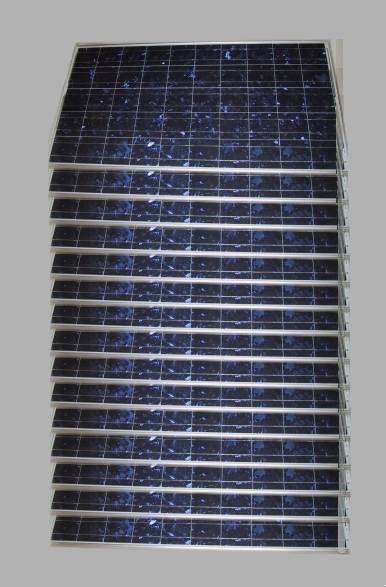
THIS SOLAR PHOTOVOLTAIC SYSTEM COULD GENERATE UP TO 450 KWH PER MONTH OF FREE ELECTRICITY, DEPENDING ON LOCATION, SEASON, & TEMPERATURE...
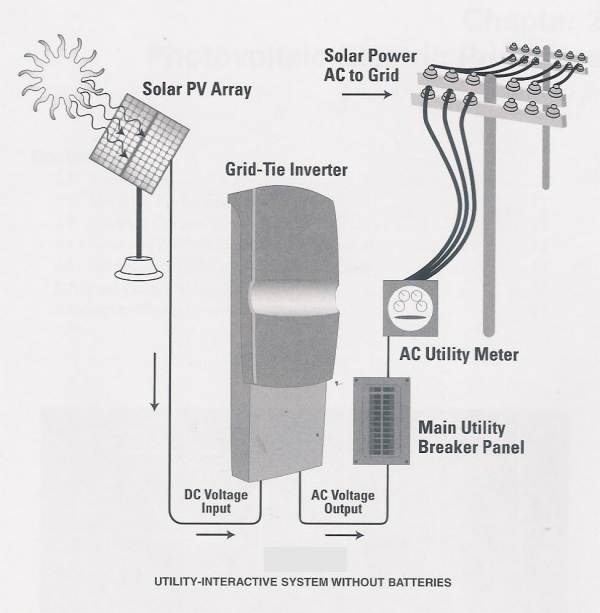
THERE IS A 30% FEDERAL TAX CREDIT IF THIS SYSTEM IS INSTALLED PRIOR TO 12/31/07, RESIDENTIAL CAP OF $2000.00, BUSINESS NO CAP... ALSO, THERE ARE SEVERAL FEDERAL & STATE GOVERNMENT TAX CREDITS, LOANS, GRANTS AVAILABLE FOR AGRICULTURAL SOLAR APPLICATION, INQUIRE WITHIN AT 1-800-222-0017 (24/7)...

THE BELOW SYSTEM IS 2550 WATT / 2.5 KW COMPLETE GRID-TIE / NET METERING SYSTEM WHICH REQUIRES NO BATTERIES...
THE BELOW ITEMS ARE INCLUDED...(all items are brand-new-in-the-box)
 (15)
MITSUBISHI MF170E83 170W 30.6V MODULES
(15)
MITSUBISHI MF170E83 170W 30.6V MODULES
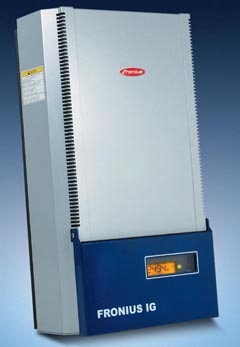
FRONIUS
IG 3000 SOLAR INVERTER
(2)
UNIRAC SOLARMOUNT RAIL SETS SMR168
UNIRAC
TOP MOUNTING CLAMPS CT5F
PV
OUTPUT, MC MALE & FEMALE, 10/1 50 FT
STRAIN
RELIEF 1/2" 2-HOLE 0.2"
LAY-IN
LUG AND SS SCREW BAG OF 10, UL
INTERCONNECT
CABLE CLIP W/MAGNACOAT
OUTBACK
PSPV PV COMBINER BOX
OUTBACK
OBFH FUSEHOLDER 600 VDC
OBF-15
FUSE KLKD-15 600 VDC



BUYER PAYS ACTUAL SHIPPING COSTS
Note: FOR FURTHER INFORMATION ON SHIPPING PLEASE CALL 1-800-222-0017 (24/7) ...
PLEASE ALLOW UP TO 30 BUSINESS DAYS FOR SHIPPING, BECAUSE OF THE SOARING DEMAND & GLOBAL SHORTAGE OF SOLAR PANELS...
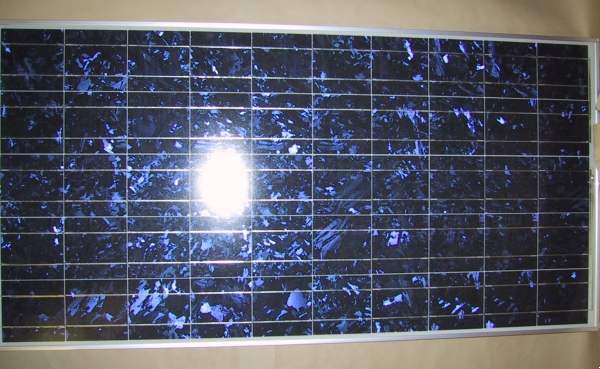
THE MITSUBISHI SOLAR PANEL IS UNIQUE BECAUSE THE MODULE LABEL SHOWS THE MINUMUM POWER RATING AS WELL AS THE MAXIMUM POWER RATING... IT HAS A MASSIVE ANODIZED ALUMINUM FRAME AND USES LEAD FREE SOLDER, AS WELL AS STAINLESS STEEL SCREWS...
MITSUBISHI PV-MF170EB3 170 WATT SOLAR PANEL SPECIFICATIONS, PER PANEL...
25
Year Limited Warranty by Manufacturer...
Listed
by Underwriter's Laboratories for UL 1703...
Certified
for IEC 61215...
Certified
for TUV Safety Class II 780VDC...
Maximum
Power - Pmax = 170 Watts (Nominal value +10%, -5%)
Cell
type- Polycrystalline Silicon
Number
of cells - 50 in series
Warranteed
minimum power rating = 161.5 Watts
Open
circuit voltage - Voc = 30.6 Volts (Nominal value +10%, -10%)
Short
circuit current - Isc = 7.38 Amps (Nominal value +10%, -10%)
Maximum
power voltage - VMP = 24.6 Volts
Maximum
power current - Imp = 6.93 Amps
Lead-free
solder is used for the interconnection circuitry and terminals...
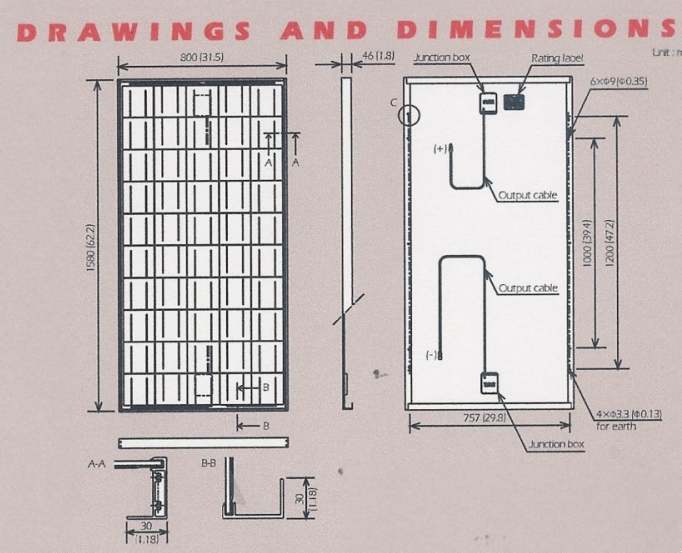
Length
= 62.2 Inches
Width
= 31.5 Inches
Depth
= 1.81 Inches
Weight
= 34.2 pounds
Note:
This panel comes with "MC" connector junction boxes, one negative and one positive...
FRONIUS IG 3000 SOLAR INVERTER SPECIFICATIONS

10
Year Extended Warranty By MFG...
Listed
by Underwriter's Laboratories for UL 1741...
EMI
= FCC Part 15 - Class A & B
Ground
fault detector and interrupter = Compliant with NEC Art.690 requirements
Ground
fault protection = Internal GFDI in accordance with UL 1741
DC
reverse polarity protection = Internal Diode
Islanding
protection = Internal, in accordance with UL 1741
Over
temperature = Output power derating
Surge
Protection = Internal DC & AC protection, Tested to 6kV
Maximum
AC over current protection = Two-pole, 15 A circuit breaker
AC
Wire sizing = Use minimum AWG 6 max 194 degrees F (90 degrees C) copper wire
DC
Wire sizing = Use minimum AWG 8 min 194 degrees F (90 degreesC) copper wire
AC
disconnect = 32 A
DC
disconnect = 40 A
Maximum
efficiency (%) = 95.2
Consumption
in stand-by night (W) = <0.15
Consumption
during operation (W) = 15
Protection
type = NEMA 3R
Cooling
= Controlled forced ventilation
Size
L x W x H = 18.5" x 16.5" x 8.8"
Weight
= 26 lbs
Ambient
temperature range = -5 to 122 degrees F
Intergrated
DC and AC disconnects = standard
Recommended
PV power (Wp) = 2500 - 3300
Operating
DC voltage range (V) = 150 - 450
Max.
DC input voltage (V) = 500
Max.
usable DC input current (A) = 18
Nominal
AC output voltage (V) = 240
Operating
AC voltage range (V) = 212 - 264 (240 + 10% / -12%)
Maximum
AC current (A) = 11.25
Maximum utility back feed current (A) = 0.0
Maximum
output power @ 40 degrees C = 2700 W
Power
Consumption During Operation = 7 W
Nominal
AC Current = 10.4 A
Max
Efficiency = 95.2%
Operating
frequency range (Hz) = 59.3 - 60.5 (60 + 0.5 / - 0.7)
Total
harmonic distortion (%) = <5
Power
Factor (cos phi) = 1
FOR TECHNICAL ASSISTANCE OR QUESTIONS, CALL 1-800-222-0017 (24/7) Ask For BEN.. Fax 1-800-378-3449...
Note: BECAUSE OF A GLOBAL SHORTAGE AND HEAVY DEMAND FOR THESE PANELS, PLEASE ALLOW 30 BUSINESS DAYS FOR SHIPPING BY TRUCK...
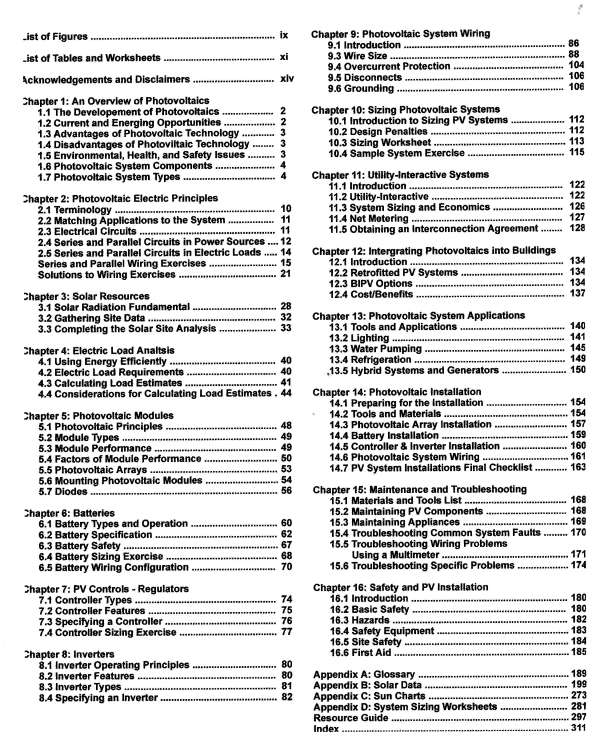
FREE DESIGN GUIDE WITH THE PURCHASE OF THIS SYSTEM...
BRAND NEW PHOTOVOLTAICS DESIGN AND INSTALLATION MANUAL - Renewable Energy Education for a Sustainable Future

CONTENTS
ELECTRICAL TERMS FOR SOLAR PV AND BATTERIES
AC = Alternating Current; a flow of electrons which regularly reverses its direction of flow... 60 cycles per second is the US standard... One cycle per second is called one Hertz (Hz).... Because of how generators work the switching of peak positive current to peak negative current takes place gradually in a sine wave pattern... Can not be stored like DC in a battery....
DC = Direct Current; a flow of electrons that flows only in one direction, negative to positive... PV's produce DC power... DC can be stored electrochemically in a battery...
Electron = A negatively charged particle which orbits the positively charged nucleus of an atom... Electrons have 1/1837 the mass of hydrogen (the lightest atom), therefore electrons are subatomic!
Electricity = The movement of electrons through a conductor... In conductors, such as glod, copper, and aluminum electrons can be easily forced to break orbit and flow to a new orbit around at a neighboring atom...
Electromotive
Force (emf) = The force that causes electrons to flow because of a difference
in electrical potential (measured in volts)....
Volts
(V) or (E) = The electromotive force which will cause current to flow... A standard
definition of the volt is: an emf of 1 Volt is necessary to move a current of
1 Amp through a 1 Ohm resistor... A voltmeter measures the difference in potential
between two points... It may be helpful to think of voltage to electricity flow
as pressure is to water flow... Named after Allesandro Volta the Italian physicist
who by 1800 was making the first batteries....
Ampere
Amp (A) or (I) = Unit of measurement of electric flow, or current, like volume
of water in a stream... A count of how many electrons pass a given point in
one second... A closed circuit is necessary for current flow... Named after
Andre Ampere, the French mathematician and physicist who quantified electric
flow around about the year 1820...
Resistance = Opposition to the flow of current... Unit of measurement is called an Ohm, stated as R, or by the Greek letter omega... All conductors have some resistance, this is necessary because if a conductor had no resistance the connection would be a short circuit with ecessive current flow... Insulators have high resistance and conductors have low resistance... Bad connections (loose, corroded, or dirty) have high resistance and can result in little current flow...
Ohm's Law = Named after the German physicist Georg Ohm who in 1827 described resistance to electrical flow... Expresses the fundamental relationship between voltage, current, and resistance... Current (Amps, or I) in a circuit equals Voltage (E) divided by Resistance (Ohms, or R)... I = E / R or Amps = Volts . Ohms... By using simple algebra Ohm's law can be reattanged a third way: R = E /I or Resistance = Volts / Amps - So to recap: The current flow in a circuit depends on both the voltage of the source (battery, or PV) and the resistance of the circuit...
Power = The amount of work being done... The unit measurement of power is called a Watt (W)... It is named after James Watt a Scottish engineer, 1736-1819... Electric power is simply the product of volatge times current... Watts = Volts x Amps... Can be rearranged as Volts = Watts / Amps and also as Amps = Watts / Volts...
Inverter = A device that converts DC to AC... There are modified sine wave (MSW) inverters, which are in reality closer to square wave than a sine wave... MSW inverters have from 30 to 40% Total Harmonic Distortion (THD), or distortion from a pure sine wave... The utility grid averages, about, 3% THD... A Trace SW inverter has from 3 to 5%, and Exeltech inverter has 1 to 2% THD...
Photovoltaic = PV: Photoelectric, light electric, or solar electric... Principal was discovered by the French physicist Edmund Becquerel in 1839, interestingly one of his relatives discovered the principal of atomic energy some years later... So PV predates nuclear power! It was not until scientists at Bell Labs in 1954 were working on silicon rectifiers (diodes) that the real potential of PV started to become clear... The space race of the late 50's forward gave PV's a niche that they have filled ever since... Because space has unlimited sunlight and PV's are autonomous power sources and are lightweight they have powered all of America's satellites, from tiny Vanguard to the very large Skylab...
Silicon PV Cell = A device that converts sunlight directly into electricity... "When illuminated, the PV cell produces a voltage between front and back... This voltage is developed accross a junction that is built into the cell structure...This voltage can be used to produce a current, just like from a battery, but the amount of current is limited by the amount of light falling on the cell...Richard Komp, PhD (in his book Practical Photovoltaics)
Open-Circuit Voltage (Voc) = The voltage of a PV cell, or module, when measured without a load being connected... It depends on the amount of sunlight hitting the PV but this voltage reading is always higher than the peak voltage...
Short-Circuit Current (Isc) = The maximum current a PV cell can deliver into a short circuit... Thsi number of Amps is directly proportional to the area of the cell and intensity of the Sunlight... This can be measured with an appropriate meter, or meter - shunt combination...
PV, or Solar Module = A series string of 32 to 36 cells, producing an open circuit voltage in bright sunlight of about 20 volts, or about 17 volts whne producing maximum power when connected to a load (battery, wtare pump, etc...) Total current of a series string is the same as a single cell...
PV, or Solar Array = A group of modules combined on a mounting structure... May be wired in series for increased voltage, or in parallel for increased current, or a combination called series-parallel...
PV Charge Controller or Regulator = A device used to prevent the overcharging of a battery(s) by PV's...
Shunt = A low value resitor used in parallel with a meter to increase the amount of current the meter can measure...
Battery = A group of interconnected electrochemical cells... Single cells are considered to be a battery if they are used alone... A battery cell contains an anode, a cathode, and the electrolyte... The nominal voltage of a lead-acid cell is 2 volts... Batteries come basically in two types, lead-acid (wet cell / like auto battery..) and gel cell (which require less maintenance...) Deep Cycle batteries recommended...
Deep -Cycle Battery = A battery specifically made to have up to 80% of its energy capacity removed and replaced repeatedly for many cycles... The paltes of this battery are much thicker than are starting battery plates...
Anode = Is the electrode (plate) within the cell which undergoes the chemical process of oxidation... Electrically, the anode is the cell's positive terminal....
Cathode = The electrode (plate) which undergoes the chemical process of reduction... The negative terminal of the cell...
Electrolyte = The medium of ion (electrically charged particle or molecule transport within the cell... The electrolyte provides a path for electron transfer between the anode and the cathode...
Active Material = The materials which chemically react within the cell to release free electrons... One active material is metal or metallic compound which is oxidized... The other active material, often a metallic oxide, is reduced....
Series = A connection from one cell or battery to another (or from one PV module to another), negative to positive, which results in twice the voltage... Note that the current stays the same when series interconnecting...
Parallel = A connection between cells or bateries (also PV's) to increase the current capacity... The voltage stays the same when we wire positive to positive and negative to negative, but the capacity in battery amp-hrs is the sum of the batteries wired in parallel... With PV arrays parallel wired you add up the amps available from each parallel unit, or set of series wired modules, to get your total current output..
Ampere-Hours, or amp-hrs = An amp hour is a current of one amp flowing for one hour... A term used to tell the amount of energy a battery has before it needs to be recharged... Capacity of a battery... You can convert amps-hrs to watt hours by multiplying amp-hrs by systems battery voltage...
Cycle = One complete charge / discharge sequence of the battery... Deep cycle batteries are rated to last for so many cycles... Such as a Trojan T-105 golf-cart battery will last for 700 deep cycles, and a Surrette CH-375 will last for 1,175 deep cycles...
State of Charge = A ratio, expressed in percent, of the energy remaining in a battery in relation to its capacity whne full...
Specific Gravity, or SG = Is the ratio of a liquid's density of water... Sulfuric acid is denser than water so therefore you can measure it with a battery hydrometer (tool that measures SG) and you can tell as what state of charge your cells are at...
Self Discharge = The tendency of all electrochemical cells to lose energy due to internal chemical reactions within the cells... Also called local action...
Charge Rate = The amount of energy per unit of time which is being added to the battery... Commonly expressed as a ratio of the battery's rated capacity to charge in relation to the time of charge duration... If you have a battery with a storage capacity of 1,000 amp-hrs and your PV array is rated at 50 amps then your charge rate is expressed as C/20 (1,000/50)...
Equalized Charge = The controlled overcharge of a seemingly fully charged battery (many cells within the battery already are fully charged) to bring the weaker cell(s) up to full charge... Should be accomplished every 30 days, or as neede... You can determine unequal cells with a hydrmeter (should be within 15 points lowest to highest reading), or if you have the large individual cells with outside terminals you can check voltage readings across each cell and compare them (should be within .05 volts lowest to highest readings)....
Use the below back button to see our entire collection of systems and our website...
